· 2 min read · Updated
Fanless cooling and wide temperature: thermal design of industrial PCs
Why fanless industrial PCs last longer, how passive cooling works and how to choose the right temperature range for your cabinet.
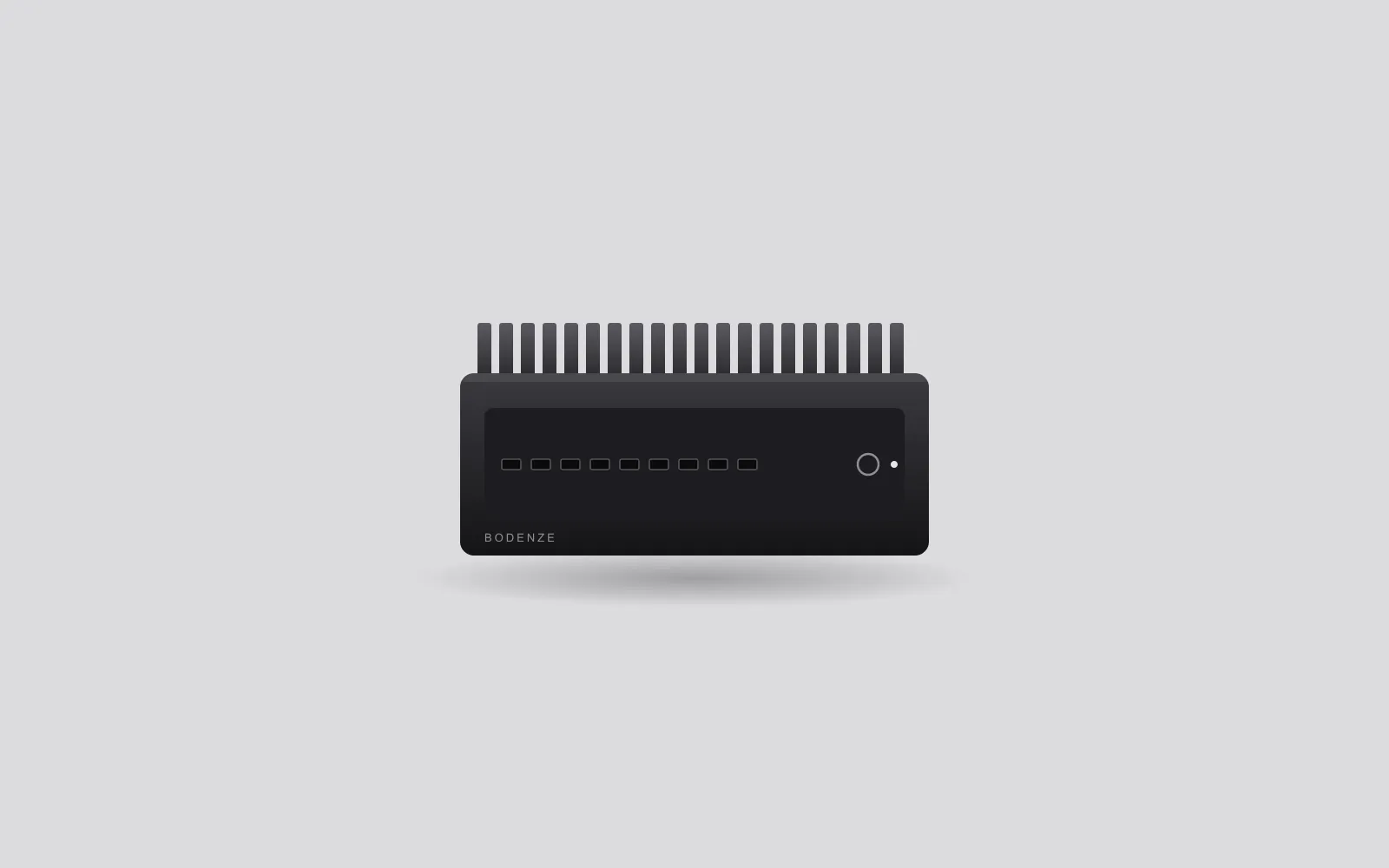
Heat is the main enemy of electronics in a control cabinet. Fanless industrial PCs use passive cooling – the housing works as a heat sink – so there is no fan to fail and no dust drawn in. Whether that works in your application depends on the processor's power and the temperature around the PC.
Key takeaways
- In passive cooling, heat flows from the processor through heat pipes or a thermal block to the finned housing.
- The operating temperature range (e.g. -20 °C to 60 °C) is measured around the device, not inside the processor.
- Leave free space around the fins and mount the PC so air can rise along them.
- Choose the processor's power (TDP) to match the cabinet temperature and workload.
How passive cooling works
The processor is connected to the housing with a thermal pad, block or heat pipes. The finned aluminium housing spreads the heat and releases it to the surrounding air by convection and radiation. Without a fan there are no moving parts, so dust, oil mist and vibration have far less effect.
Temperature classes
| Class | Typical operating range | Example environment |
|---|---|---|
| Commercial | 0 °C to 40 °C | Air-conditioned control room |
| Extended | -10 °C to 50 °C | Production hall |
| Wide | -20 °C to 60 °C | Cabinet in a hall or outdoors |
| Extreme | -40 °C to 70 °C or wider | Outdoor, transport, energy |
Sizing for a hot cabinet
- Measure or estimate the maximum temperature inside the cabinet, which is often 10–15 °C above the room.
- Choose a model whose range covers that value with margin.
- Avoid mounting directly above drives or power supplies.
- Check the manufacturer's mounting orientation; fins should be vertical.
- Use industrial SSDs and memory rated for the same range.
For the full selection process read 7 criteria for choosing a fanless industrial PC and what is an industrial PC. Explore our fanless industrial PCs or ask for a configuration.
Frequently Asked Questions
Do fanless PCs throttle when they get hot?
Processors reduce their clock speed when they reach their thermal limit. A correctly sized fanless PC stays below that limit across its rated temperature range under the planned workload.
Can a fanless PC run a powerful processor?
Yes, within limits. Larger housings with more fins can cool mid-range and some high-end processors passively; very high power levels need active cooling.
Why does wide temperature matter if the hall is heated?
Inside a closed cabinet the temperature is usually much higher than in the hall, especially in summer and next to drives and power supplies.